Format Transfers and Audio Restoration
High Quality Transfers
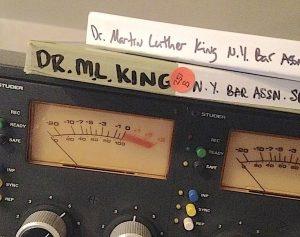
We guarantee the highest quality for transfers from open reel tape, cassettes, microcassettes, vinyl, and DATs.
Our Transfer Suite uses the same equipment as Old Town School of Folk Music in Chicago, where our very own Joe Tessone works daytime as a lead Audio Archivist. We follow strict protocols written and developed by Joe Tessone under the guidance and recommendations of the Association of Recorded Sound Collections ; the nation’s most trusted and respected audio preservation organization.
We take audio preservation very seriously because we understand its importance as a means of preserving history. Our standard is 100% error-free transfers, every time. Without the right gear and without the right engineer doing the job, this can very difficult to achieve. However, we guarantee it every time because we hold ourselves to our strict protocols and follow ARSC’s standards for best practices.
We will provide you an exact digital replica of what you bring us.
Using state of the art software with extremely precise logarithms, we can also provide digital restoration and mastering of your transfer to give you a more clear and noise-free listening copy.
Restoration Example:
Audio clip: Adobe Flash Player (version 9 or above) is required to play this audio clip. Download the latest version here. You also need to have JavaScript enabled in your browser.
The Time is Now to Transfer Your Audio
Open Reel Tape:
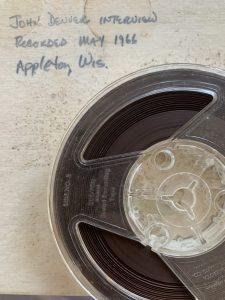
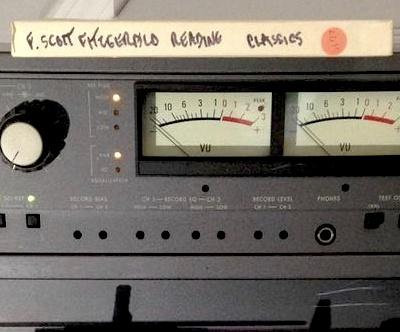
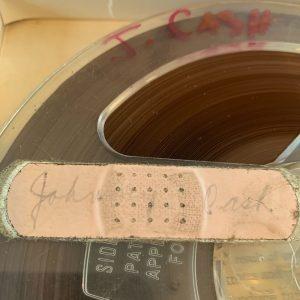
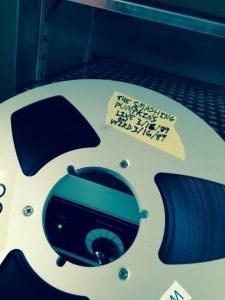
Did you know that the projected lifetime of open-reel analog tape is only 10-20 years? It’s true. The tape starts to break down and lose quality around that time. From experience, tapes manufactured in the 1970′s have proven to be the most troublesome of them all. The good news is that just because a tape is past it’s prime does not mean it cannot be salvaged. However, time is still of the essence and longer you wait the less likely it will be that anyone can preserve it’s full quality. There will be a point when the tape is unusable and the audio will be lost forever
Cassette:
The average lifespan of a cassette is 15-25 years. However, because cassettes have moving parts, they often have an entirely new set of issues that need to be addressed. In addition to the problem of audio degradation, screws can come loose, shells can crack, reels can become jammed, pads can be damaged, and the tape can tangle. If these things are not identified and repaired before doing a transfer, the tape can be damaged. Using a properly calibrated cassette player will also minimize the risk to the tape.
Cassettes often come to us damaged because they have been played, handled, and then stored improperly about for years. We can repair damaged cassettes and give you a transfer that you can enjoy without worry.
DATs (Digital Audio Tape):
The lifespan of a DAT can be as little as 2 years, but on average is somewhere between 5-15 years. DATs have proven to be a tricky medium because if the original machine they were recorded on was not set up correctly during recording, playback on other machines might have issues. However, we have developed ways to preserve the integrity of the original audio if this proves to be the case.
Along with similar mechanical issues that cassettes can have (mentioned above), there is a variety of other problems that can occur with DATs such as sampling rate issues, digital errors, and chemical breakdown.
In fact, DATs have proven to be so unreliable that their manufacture has come to an end. They are now being looked at as one of the most at-risk audio formats.
Vinyl:
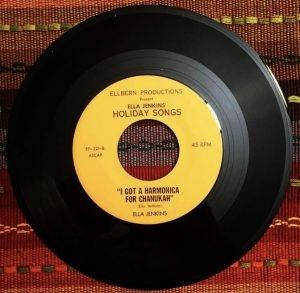
Vinyl records have proven to be a very hardy medium for audio storage and they can last a very long time if stored and used properly. However, in the age of the iPod, they are not always the most convenient. In addition, they wear down with excessive use. We can transfer and create a back-up your collection in digital format that is convenient for you. Having digital back-ups of your vinyl records will help to increase the longevity of the original record because it will reduce overuse.
We can also provide re-mastering that will remove most pops, clicks, and crackles associated with vinyl.
Preserving for the Future
Some might consider it overkill to do analog to digital transfers at the high resolution of 96 kHz/24 Bit (more than double CD quality), however, when we do your transfer, we are looking to the future.
True, most consumer systems cannot play digital audio at such high resolution, but we believe the future will change that and we want you to have a format that will last.
Of course, we know you want to wait for the future to come to listen to your audio, so we will also provide a CD quality copy of the preservation master for listening on currently manufactured products.
Interoperability- Creating Products That Are Transferable
Our standard digital format for audio preservation is the Broadcast Wave.
We use BWAVs because it allows us to encrypt important engineering metadata into each preservation master that we provide for you.
This will ensure that future audio engineers and listeners who may come across your digital file will have the entire history of the file from its original format to the machines and software used to transfer it to its current form. This metadata will also contain the original date that the material was recorded (if available) and the date it was transfered, along with titles, descriptions, and any other relevant information associated with the audio.
The addition of this metadata is meant to ease the exchange between different computer platforms and software, thus allowing future users of the file to easily integrate it into their system while continuing to preserve the audio’s quality.
No Job Too Large or Too Small
Every audio document contains a little piece of history. We have worked with institutions who have had hundreds of hours of audio and individuals with single cassette tapes of their baby’s first words. All of these have value and deserve to live on for future generations to enjoy. We promise to treat every project as though it contained the meaning of life.
Pricing
On average, we charge a base price of $20 per hour for audio transfer and preservation work. However, every transfer job is very different so we like to provide you with a full estimate depending on the project. Some projects make more sense to charge per unit, some per hour. Some projects require repair and parts cost, some do not. Unlike many companies that do audio transfers, we prefer to assess the cost of every project on a case by case basis so that we can provide the necessary care and attention to detail that every audio document deserves.
Turnaround Time
This depends on the length and intensity of the project. If it is a single cassette or DAT, we might be able to have it for you by the end of the day. If you have 3000 open reel tapes, expect it to take some extra time. We will assess turnaround time on a case by case basis.
Consulting/ Archive Set-up
If you are a large enough institution to have your own on-site, staffed transfer facility and you need someone to help with training and archive set-up, you’ve come to the right place. Please contact Joe Tessone at 773-512-2630 for details and references.